
7 min read
Paris Blockchain Week 2026: DeFi's Regulatory Reckoning
In the middle of April, around 10,000 attendees filled two days of the Carrousel du Louvre for Paris Blockchain Week 2026, with the official theme "Where Institutions and Digital Assets Finally Meet." More than 70 percent of the room was C-level. Goldman Sachs, Deutsche Bank, AWS, and Circle were on stage. The French Minister for AI and Digital Affairs delivered a keynote on European digital sovereignty. The institutions had arrived.
The DeFi conversation, by contrast, was the quietest it has been in years. Not because nothing was happening, but because the regulatory reckoning protocol teams had been deferring for half a decade was finally on the table.
The "fully decentralised" exemption is narrower than people pretended
MiCA carves out an exemption for crypto-asset services that are "fully decentralised and lack intermediaries." For most of 2024 and 2025, DeFi teams treated the line as comfortable cover. Spin up a DAO, push the keys into a multisig, and the protocol qualifies.
ESMA and the EBA disagreed. In their Joint Report on Recent Developments in Crypto-Assets, published on 13 January 2025, the regulators acknowledged the exemption's scope was uncertain and proposed assessing systems case-by-case based on control and attribution rather than narrative. The message was direct. If a protocol has admin keys, upgrade authority, emergency stops, concentrated voting power, or a single official front-end that operates as a practical gatekeeper, it has people in control. Those people are VASPs.
By Paris Blockchain Week, the lawyers running compliance sessions on the side stages were asking the same question on repeat. Who actually upgrades your contracts, and have they been publicly disclosed?
The Travel Rule has no exemption
The EU Transfer of Funds Regulation entered full effect on 30 December 2024. Unlike the US Bank Secrecy Act version, the EU's TFR has no transaction threshold. Every transfer between regulated entities carries originator and beneficiary data, regardless of size. Globally, 73 percent of FATF jurisdictions had passed Travel Rule legislation by 2025, up from a much smaller base two years earlier.
DeFi protocols with control points are VASPs under that framework. Self-hosted wallets remain out of scope, but the moment a protocol's front-end interface, governance committee, or upgradeable contract sits between the user and the rails, the operator inherits the obligation. The "we just publish a smart contract" defence has been getting less convincing in regulator letters since 2023. By April 2026, it had largely stopped being a defence at all.
The market consolidated while everyone was watching the rules
The other thing the floor in Paris had to reconcile was that DeFi's market structure had shifted under the regulatory cloud. The headline numbers had grown, with DeFi continuing to expand through 2025, but the distribution had narrowed sharply. Uniswap's DEX dominance had fallen from roughly 50 percent to around 18 percent in twelve months. Aave's TVL had doubled year-on-year to roughly $24.4 billion across thirteen chains, leaving it the dominant lending protocol by a distance that didn't exist a year earlier.
The pattern under the numbers wasn't decline. It was consolidation. Protocols that had structured themselves to live under regulatory scrutiny were taking flow from those that hadn't. Lending was concentrating. DEX liquidity was concentrating. The long tail of half-decentralised forks that defined 2021–2022 was thinning out.
What this looked like on the ground
The conversations in Paris reflected the shift. Protocol teams were no longer asking whether the "fully decentralised" exemption would protect them. They were asking what compliance actually costs, who provides it, and whether they could keep a front-end while pushing custody and Travel Rule obligations to a regulated counterparty. DAO foundations were reorganising into licensed entities. Front-end operators were either getting CASP authorisation themselves or partnering with someone who had it. The path of least resistance was no longer "deny intermediation." It was "intermediate explicitly, and put a regulated wrapper around it."
The institutional side of the conference saw the same picture from the opposite angle. Banks and asset managers wanted to engage with DeFi yield, but only through licensed counterparties they could underwrite. The market converged on the same answer from both directions.
What this means for the infrastructure layer
Every protocol team and front-end operator confronting the reckoning landed on the same set of questions. Where does customer custody actually sit? Who is on the hook if assets are frozen mid-trade or a chain reorganises? How is Travel Rule data passed between the regulated entity and the protocol layer? The infrastructure that answers those questions cleanly is what separates a DeFi project that survives the next two years from one that quietly geofences out of the EU.
What to watch next
Three things will shape the next twelve months for DeFi in Europe, and they sat just beneath every conversation in Paris.
The first is the European Commission's Article 142 review. The Commission is required to assess MiCA's coverage and consider whether DeFi needs its own framework. Whatever the review concludes will shape what a "MiCA II" actually looks like, and how explicit the obligations on protocol operators become. The current case-by-case approach gives lawyers room to argue. A statutory framework would close it.
The second is precedent. ESMA and the EBA's case-by-case assessments will start producing actual decisions through 2026. Each one narrows or widens what "fully decentralised" means in practice. Builders should be reading those decisions the way US founders learned to read SEC enforcement actions.
The third is AMLA. The EU's Anti-Money Laundering Authority becomes operational in 2026, with direct supervisory authority over significant CASPs. For DeFi front-ends pursuing CASP authorisation, that means a new regulator at the table, one focused specifically on transaction monitoring, suspicious activity reporting, and the rough edges where on-chain activity meets traditional AML obligations.
What we took back
Paris Blockchain Week 2026 was not the funeral DeFi sceptics had been expecting. It was the negotiation. The fully decentralised exemption is narrow but real. The Travel Rule applies wherever there is intermediation. The market is concentrating around protocols with the operational maturity to live under those rules. DeFi's reckoning didn't kill it. It restructured what counts as DeFi in the first place.
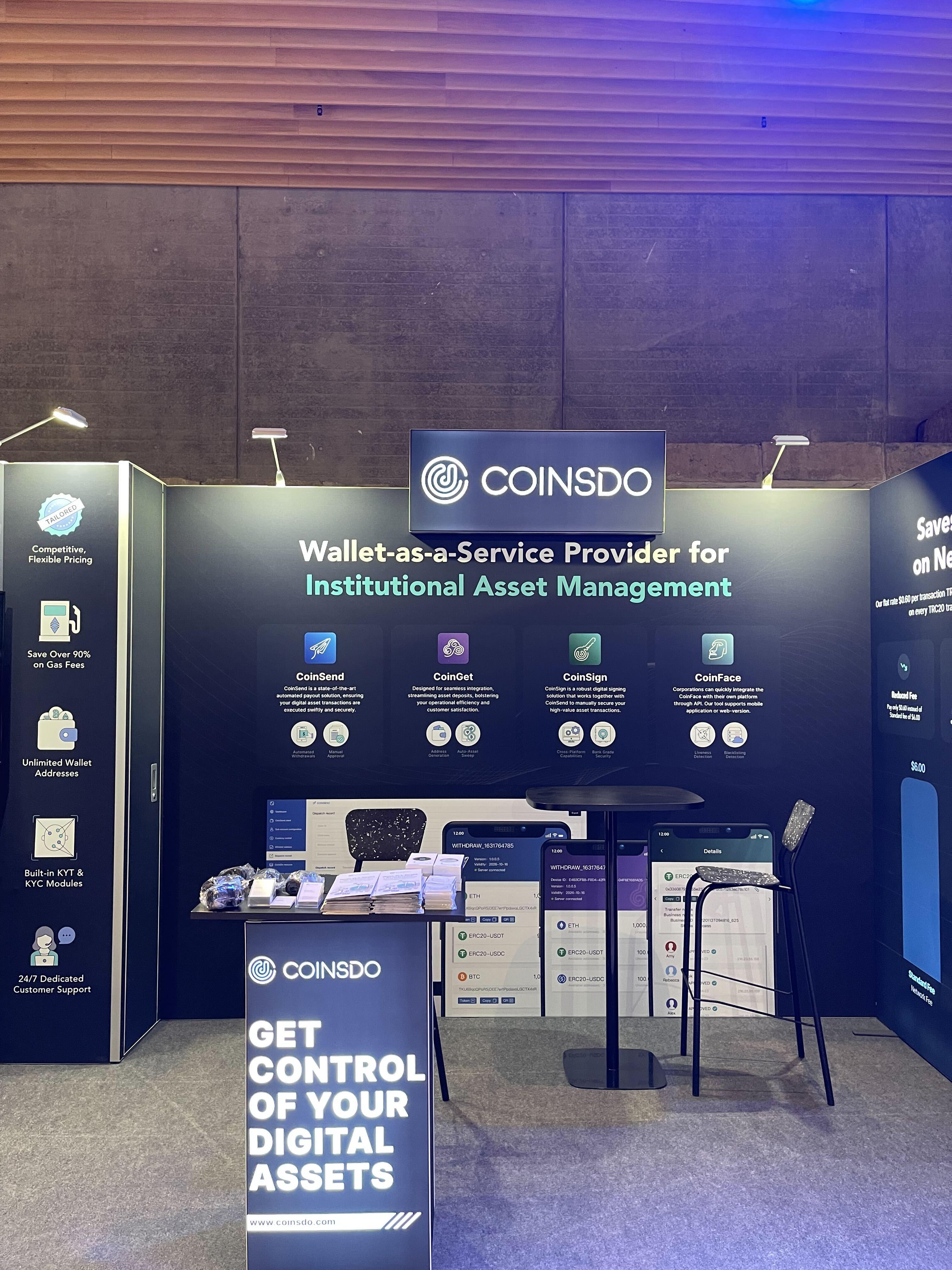
ready to rock and roll

crowd is massive. love the vibes

Glad to connect with like-minded folk